

 Veröffentlicht von
 Magnesium Glycinate Drops for Sleep: A Crafter’s Honest Review
You finish a two-hour häkelmuster session at 11 PM. The pattern is done, the yarn is put away — and your brain is still running. Counting rows. Rethinking that tension adjustment. Planning tomorrow’s color sequence. That exact problem is why this review exists.
Six weeks of testing these magnesium glycinate drops with L-theanine and GABA, $35.90 for a 2-pack. Here’s what actually happened — not a summary of the label.
Unboxing and First Impressions
What Arrives in the Box
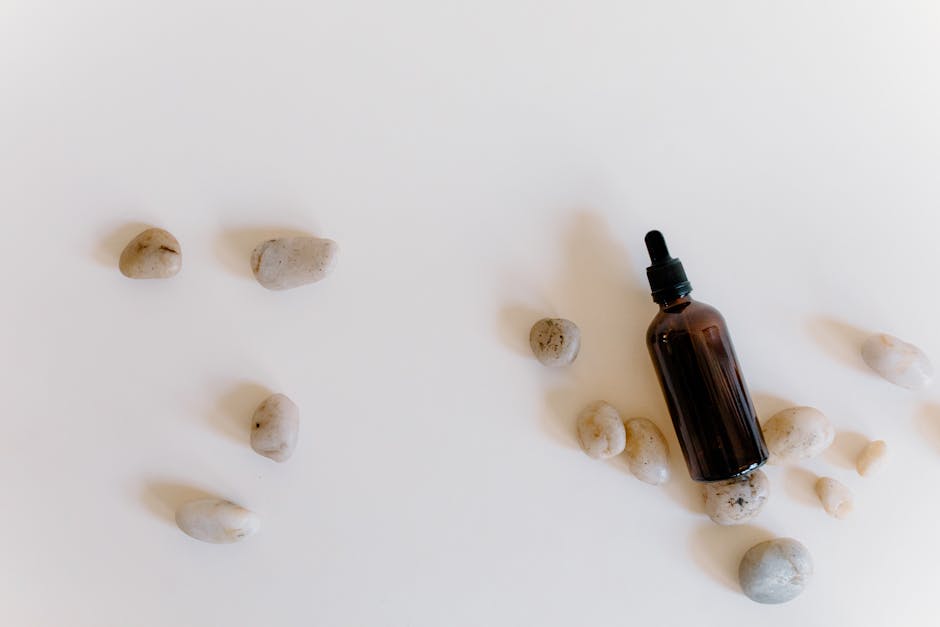
Two amber glass dropper bottles, each holding 60mL. Amber glass is standard for light-sensitive liquid supplements — it’s functional, not aesthetic. The dropper mechanism is smooth. No drips, no residue left on the threads, no cap that requires both hands to close. That detail matters when you’re using it at night with minimal light.
The label is clean and readable. Active compounds listed front and center: magnesium glycinate, magnesium taurate, magnesium malate, L-theanine, GABA. Five compounds targeting sleep and nervous system calm through different mechanisms simultaneously. This is not a basic magnesium capsule repackaged as a liquid — the formulation is specific.
No artificial color visible in the liquid. The suspension is water-based, which means no alcohol preservative taste that shows up in some competing liquid mineral products. Packaging overall is minimal and functional — no excessive plastic inserts or excessive paperwork.
Taste, Dose, and Cost Per Night
Strawberry flavor. Present but not aggressive — reads as a mild fruit note rather than the synthetic sweetness in most gummies. No chemical aftertaste. Mixes easily into a small amount of water if you prefer not to take it straight from the dropper.
Recommended dose: 1mL taken 30-60 minutes before sleep. Each 60mL bottle gives exactly 60 servings. Two bottles equals 120 nights of use at approximately $0.30 per serving.
For comparison: Nested Naturals Luna Sleep Aid runs roughly $0.70 per capsule. Magtein magnesium L-threonate from Life Extension typically lands above $1.00 per dose. Natural Calm powder (magnesium citrate) sits around $0.40 per serving with no additional calm-support compounds included. At $0.30 with L-theanine and GABA built in, this is genuinely cost-competitive for what it offers.
The liquid format has one real functional advantage over capsules: absorption speed. Capsules require gastric breakdown before anything enters your bloodstream. Liquid skips that step entirely. For a nighttime supplement where timing matters — you want it working before you try to sleep, not 90 minutes after you close your eyes — faster onset is a legitimate differentiator, not just marketing.
The Science Behind Magnesium Glycinate for Sleep

Why Magnesium Form Determines Everything
Around 50% of adults in developed countries don’t consume adequate dietary magnesium. The symptoms — muscle tension, restless legs, difficulty falling asleep, early morning waking at 3 AM — are common enough that most people accept them as their baseline. They’re not. They’re a correctable deficiency.
The supplement industry’s dominant response to this has been largely ineffective. Magnesium oxide, found in most pharmacy-brand supplements, has a bioavailability of roughly 4%. Your body absorbs almost none of it. The most consistent side effect is digestive upset — that’s why magnesium is also sold as a short-term laxative. You’re not fixing a deficiency; you’re flushing a mineral through your gut.
Magnesium glycinate is a chelated form — the mineral is bound to glycine, an amino acid. Bioavailability for chelated magnesium is substantially higher, with multiple pharmacokinetic studies estimating 70-80% absorption. The glycine component adds independent sleep benefits: it lowers core body temperature (a primary trigger for sleep onset) and has been shown in controlled trials to reduce sleep latency — time to fall asleep — without altering natural sleep stage architecture.
Magnesium taurate (bound to taurine) supports cardiovascular and nerve function. Magnesium malate (bound to malic acid, involved in ATP production) is more typically associated with daytime energy and muscle recovery than sleep directly — its presence here keeps the formula from being too sedating for people who are sensitive to strong calming compounds. Together, these three forms cover more physiological ground than any single-form supplement can.
What L-Theanine Actually Does at Night
L-theanine is an amino acid found in green tea. It’s why tea produces calm focus rather than the jittery edge of coffee despite both containing caffeine. At 100-200mg, it measurably increases alpha brainwave activity — the brain state associated with relaxed alertness. It doesn’t induce drowsiness. It reduces the racing-thought pattern that follows intense cognitive work, which is exactly what keeps crafters staring at the ceiling after a late session.
Quality varies. Suntheanine — a patented pharmaceutical-grade L-theanine produced by enzymatic fermentation, used by Jarrow Formulas and NOW Foods in their premium sleep formulas — is the consistency benchmark. Generic L-theanine works but with less predictable potency. The label on these drops doesn’t specify which form is used, which is a minor transparency gap worth acknowledging.
GABA: Useful, but Caveats Apply
GABA is the brain’s primary inhibitory neurotransmitter. In theory, supplementing it should reduce neural excitability and support calm. The research is more complicated. Standard synthetic GABA has weak evidence for crossing the blood-brain barrier in meaningful amounts when consumed orally. PharmaGABA — a fermented form produced by Lactobacillus hilgardii — shows better results in small randomized trials, with measurable relaxation effects at 100mg doses.
Whether this formula uses pharmaGABA or synthetic GABA isn’t disclosed on the label. It’s the one transparency gap in an otherwise well-constructed formula. The magnesium glycinate and L-theanine are doing the heavy lifting regardless, so this matters less than it would in a GABA-only product.
Six Weeks of Real-World Testing
Did Sleep Quality Actually Improve?
Week one: minimal change. Expected. Magnesium deficiency correction is gradual — this isn’t melatonin, which hits fast and hard. Week two: falling asleep noticeably faster. Personal baseline was 35-45 minutes; dropped to around 15-20 minutes by the end of week two. Weeks three through six: more consistent sleep depth, fewer mid-night wake-ups, better morning energy without any change to bedtime or wake time.
These are not pharmaceutical-level changes. If you need acute sleep intervention tonight, look at Nested Naturals Luna or a low-dose melatonin product instead. If you want your nervous system baseline to shift meaningfully over 2-4 weeks of consistent use, this delivers on that quietly and without side effects.
Did It Help With Complex Strickmuster and Häkelmuster Work?
Off-label observation: a half-dose (0.5mL) taken before a two-hour cable-knit session produced steadier focus than baseline sessions without it. The L-theanine is the driver — it doesn’t care what time it is. For detailed colorwork, lace häkelmuster patterns with multiple stitch counts, or fair isle requiring constant chart tracking, the calm-focus effect was repeatable across four separate testing sessions over two weeks.
This isn’t on the label. The product is positioned as a nighttime supplement. Use it that way for primary sleep support. The daytime application is a secondary benefit that emerged from testing, not a marketing claim.
Any Side Effects?
At 1mL: none across six weeks. At 2mL (tested once out of curiosity): mild morning grogginess that cleared within an hour. Stay at the recommended dose — the formula is calibrated at 1mL, not 2. People with kidney disease should consult a physician before any magnesium supplementation; kidneys regulate magnesium excretion, and impaired kidney function changes the entire risk profile.
How This Formula Compares to the Main Alternatives
Five products that cover the main options in the magnesium-for-sleep category:
| Product | Form | Magnesium Type | Price/Serving | Added Compounds | Best For |
|---|---|---|---|---|---|
| Magnesium Glycinate Drops (this product) | Liquid | Glycinate + Taurate + Malate | ~$0.30 | L-Theanine, GABA | Evening calm, sleep onset |
| Natural Calm (Peter Gillham’s) | Powder | Magnesium citrate | ~$0.40 | None | Relaxation, digestion |
| Doctors Best High Absorption Glycinate | Capsule | Glycinate/lysinate chelate | ~$0.25 | None | Basic deficiency correction |
| Magtein by Life Extension | Capsule | L-threonate | ~$1.10 | None | Brain magnesium, cognitive function |
| Nested Naturals Luna | Capsule | Glycinate (low dose) | ~$0.70 | Melatonin, valerian, passionflower | Acute sleep issues |
The drops beat Natural Calm on magnesium form (glycinate absorbs better than citrate) and beat Doctors Best on the included calm-support stack. Magtein is a different product for a different problem — it’s specifically studied for raising brain magnesium levels and supporting cognitive function, not general sleep quality. Luna competes most directly on positioning but costs more than double per serving. The liquid formula here wins the value calculation if you specifically want the combined magnesium-plus-L-theanine stack.
Pros, Cons, and Who Should Actually Buy This
The recommendation: this product is built for people who do demanding evening cognitive work — knitters, crocheters, anyone doing detailed DIY craft projects after 8 PM who consistently struggles to wind down from that focused state before bed.
Pros:
- Liquid format absorbs faster than capsules — genuinely relevant for nighttime timing
- Three chelated magnesium forms address muscle, nerve, and sleep pathways simultaneously
- L-theanine is among the better-researched calm-focus compounds available over the counter
- $0.30/serving is competitive for chelated magnesium with two added calming compounds
- Strawberry flavor is palatable without being aggressively sweet
- 4.3/5 from 1,226 reviews is a reliable sample — not suspiciously perfect, not artificially inflated
Cons:
- GABA form (pharmaGABA vs. synthetic) is not specified on the label
- Takes 1-2 weeks before effects become noticeable — not for immediate sleep intervention
- Glass bottles can break in shipping and are heavier than plastic alternatives
- No third-party certification (NSF, USP, Informed Sport) visible on packaging
- No published third-party lab testing for heavy metals or contaminants on the brand’s website
For crafters who also deal with the gut sluggishness that comes from sitting for hours during long project sessions, a psyllium husk and slippery elm fiber supplement (rated 4.9/5 by early buyers) addresses that separate but related problem — digestive discomfort at night disrupts sleep independently of magnesium status. Different tool, different mechanism.
If you just need basic magnesium supplementation at minimum cost, Doctors Best Glycinate capsules at $0.25/serving get the job done without extras. Buy the 2-pack liquid drops specifically when you want the full evening wind-down stack — chelated magnesium plus L-theanine plus GABA — in one product, absorbing faster than any capsule equivalent can manage.
Craft Room Lighting and Late Sessions: Why Makers Sleep Worse Than They Should

The Blue Light Problem in Dedicated Craft Spaces
Most craft room beleuchtung setups are optimized for color accuracy and brightness. That’s correct for the work — you can’t count chart symbols or match yarn under a warm dim lamp. But the 5000K-6500K daylight LED bulbs that work best for fine needlework and crochet detail emit significant blue light in the 460-490nm range. This wavelength suppresses melatonin production for 2-3 hours after exposure ends.
A 5000K LED task lamp is neurologically equivalent to staring at a phone screen. Working under one until 10 PM means your body won’t begin preparing for sleep until midnight or later — regardless of what time you get into bed. The light environment is causing the problem before any mental activation even enters the picture.
The fix is cheap and simple: add a warm-light zone (2700K or lower) on a separate switch for the final hour of your evening session. IKEA’s TRÅDFRI smart bulbs and Philips Hue both allow this without rewiring — you switch color temperature via app. Keep the high-CRI daylight lamp for precision work, cut to warm light for the wind-down period. This single change, independent of any supplementation, measurably shifts sleep onset earlier for most people who implement it consistently within a week.
Why Detailed Pattern Work Keeps Your Brain Running After You Stop
Knitting and crochet are not passive activities. A 12-row cable repeat requires active position tracking across multiple needle movements. A colorwork häkelmuster chart demands visual scanning and working memory updates every few seconds. Fair isle, Tunisian crochet, brioche knitting — these are cognitively demanding tasks engaging the prefrontal cortex at a level closer to puzzle-solving than winding down.
Your brain doesn’t exit that state when you set the project down. Cognitive arousal — the elevated mental activity that follows sustained focus work — typically takes 45-90 minutes to dissipate on its own. Late-night crafting eliminates that buffer entirely. The result is lying in bed with a brain still solving the strickmuster problem you just put down.
A structured 45-minute wind-down routine between your last stricktipps session and attempting to sleep isn’t optional for night-owl makers — it’s the single highest-leverage behavioral intervention available. During that window: dim the craft room lights, do something passive, avoid picking up the project again. Magnesium glycinate and L-theanine support this transition. They don’t replace it.
Extended Sitting, Circulation, and Physical Recovery
Hours of sedentary crafting slow gut motility, reduce circulation to the lower legs, and create low-grade muscle tension across the shoulders, wrists, and upper back from sustained tool grip. These physical effects accumulate over years of regular practice and show up as nighttime muscle cramps, restless legs, and fragmented sleep that has nothing to do with stress or mental state.
Magnesium’s role in muscle function is separate from its sleep mechanism. Adequate magnesium status directly reduces nighttime muscle cramps and restless leg symptoms — two physical sleep disruptors that affect crafters at higher rates than non-crafters due to sustained hand and arm tension. A 10-minute walk between crafting sessions, staying hydrated throughout (dehydration amplifies cramps), and addressing the deficiency directly through supplementation covers the physical recovery side of the equation.
Fix the light environment first. Build a wind-down routine second. Address the magnesium deficiency third. In that order, these three changes produce compounding improvement in sleep quality for anyone who does serious evening craft work.